Decentral Art Pavilion. Venice Art Biennale 2022

Exhibition
Decentral Art Pavilion
Venice Art Biennale 2022
Palazzo Giustinian Lolin, Venice · 23 April – 20 June 2022
Singularity · Curated by Florencia S.M. Brück, Javier Krasuk, Diego Lijtmaer and Simone Furian
Decentral Art Pavilion. Venice Art Biennale 2022
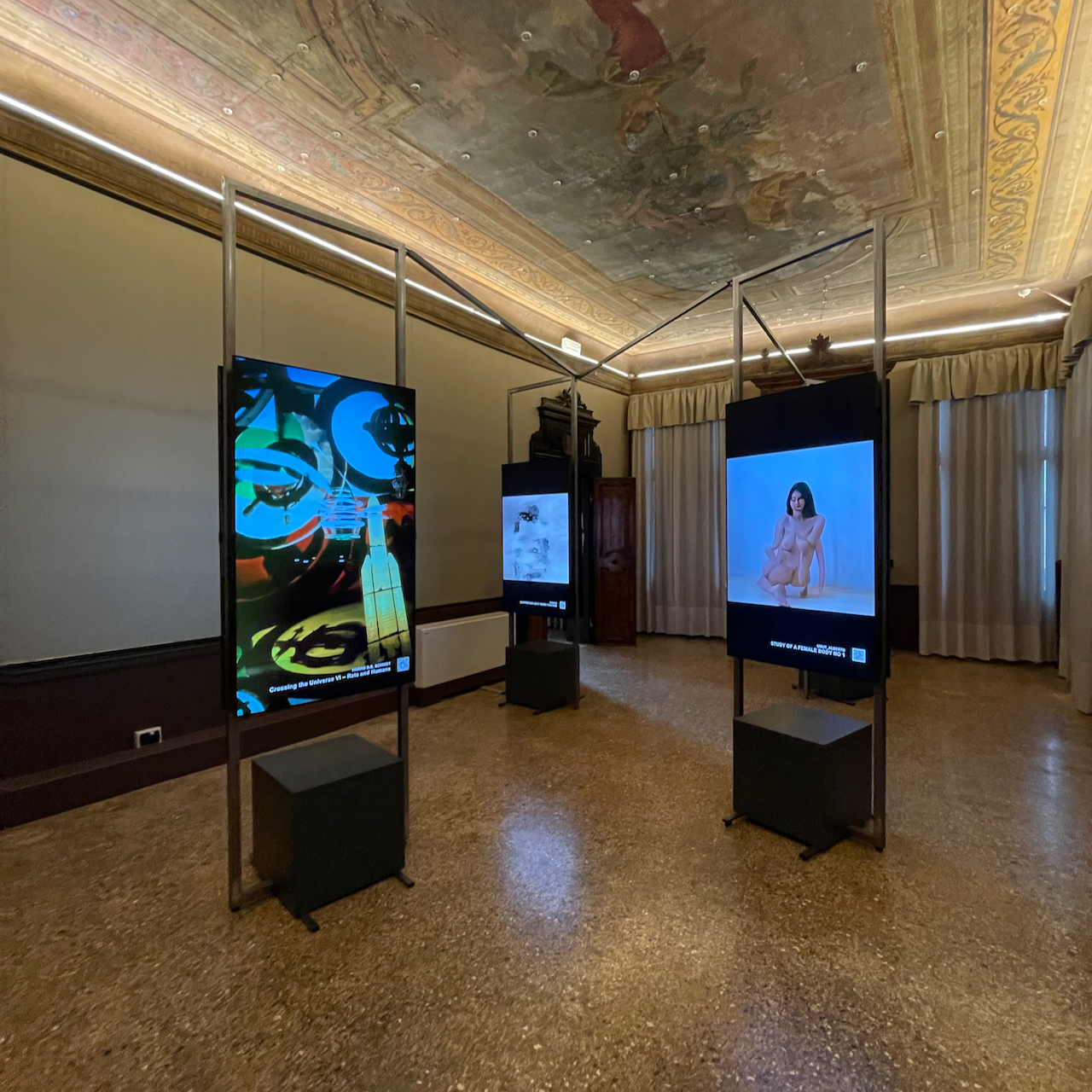
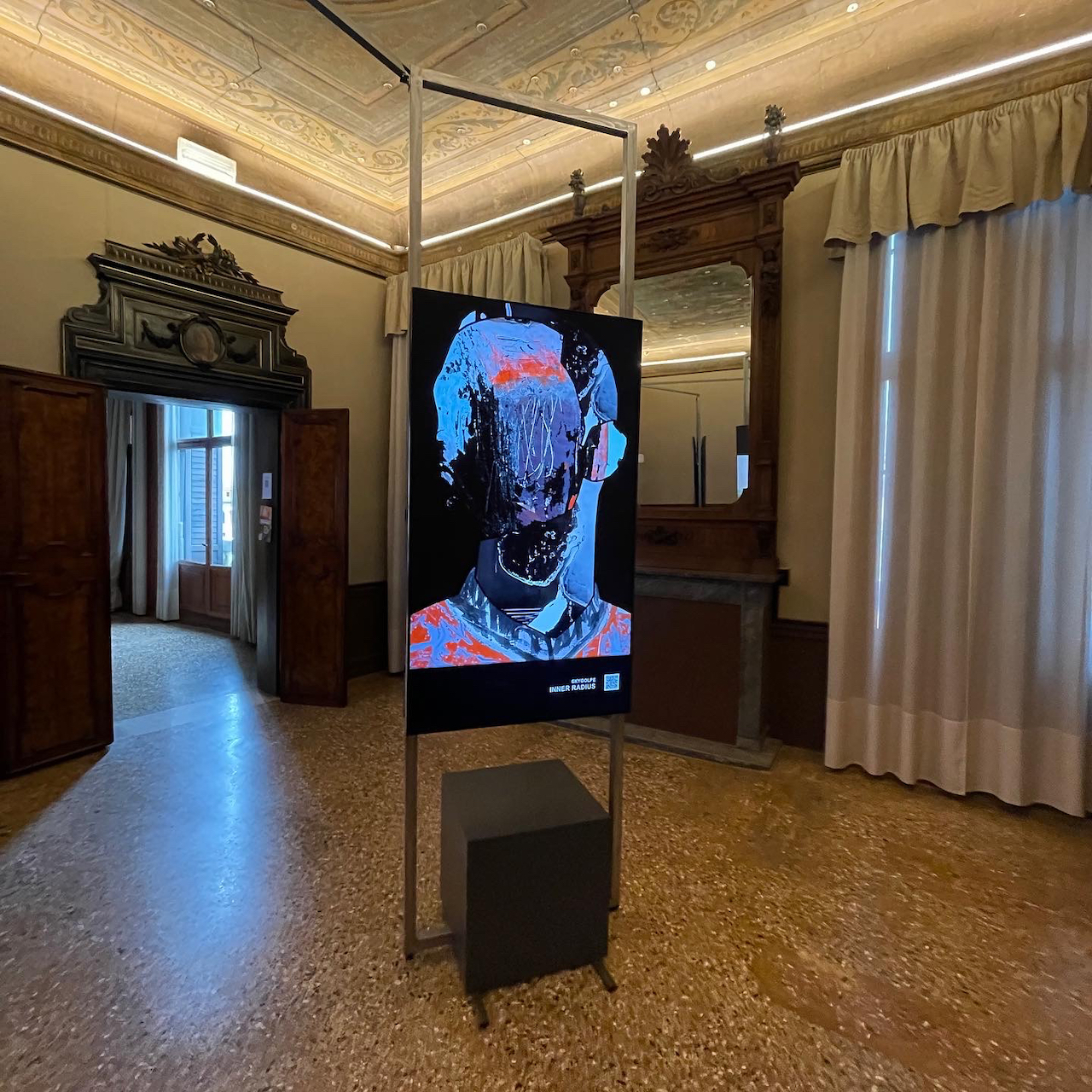
Singularity, the first edition of the Decentral Art Pavilion, ran from 23 April to 20 June 2022 at Palazzo Giustinian Lolin in Venice, in parallel with the Venice Art Biennale. It was curated and organised by Florencia S.M. Brück, Javier Krasuk, Diego Lijtmaer and Simone Furian, with installation design by David Rodríguez Gimeno and a photography section curated by Arianna Grava.
The exhibition brought together more than 200 NFT works by over 80 artists, among them Beeple, Coldie, Aaron Penne, Studio Drift, Justin Aversano, XCOPY, Raphael Lacoste, Trevor Jones, Michael Yamashita, Annibale Siconolfi, Maxim Zhestkov, Filip Custic and Matt DesLaurier. A section titled 0.14, curated by Robert Alice, traced the early history of NFTs through some of the first works of the movement.

Over eight weekends the pavilion hosted programmes on generative art (curated by Art Blocks), photography (Arianna Grava), women and NFTs (AKQA), fashion and music, and a series of talks, Alternative Spaces, on digital ownership and provenance. The exhibition could also be visited in a metaverse version and, through Over the Reality, in augmented reality across Venice.
Partners included SuperRare, Art Blocks, Dolce & Gabbana, Blue Swan, Over the Reality and AKQA.






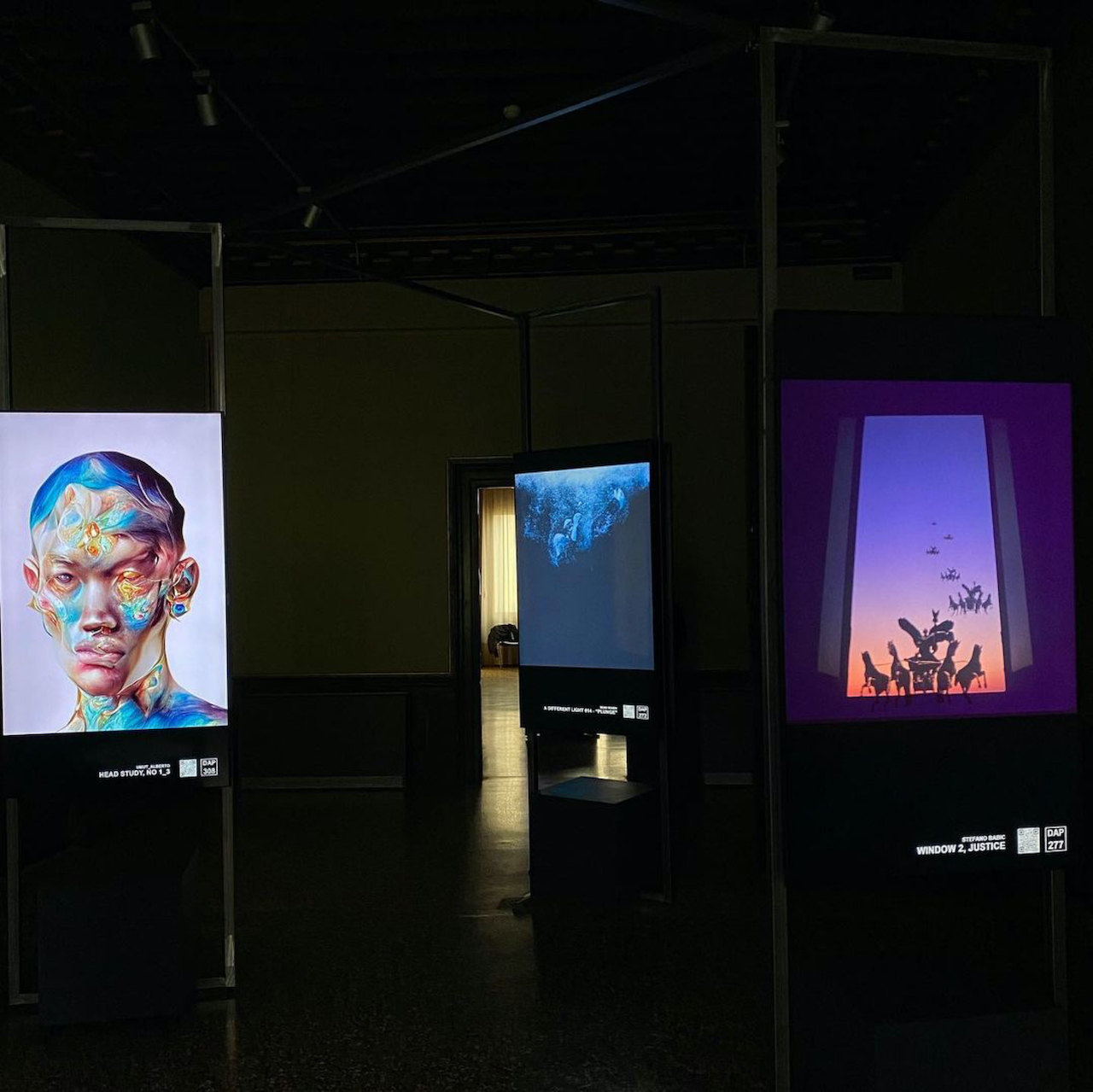
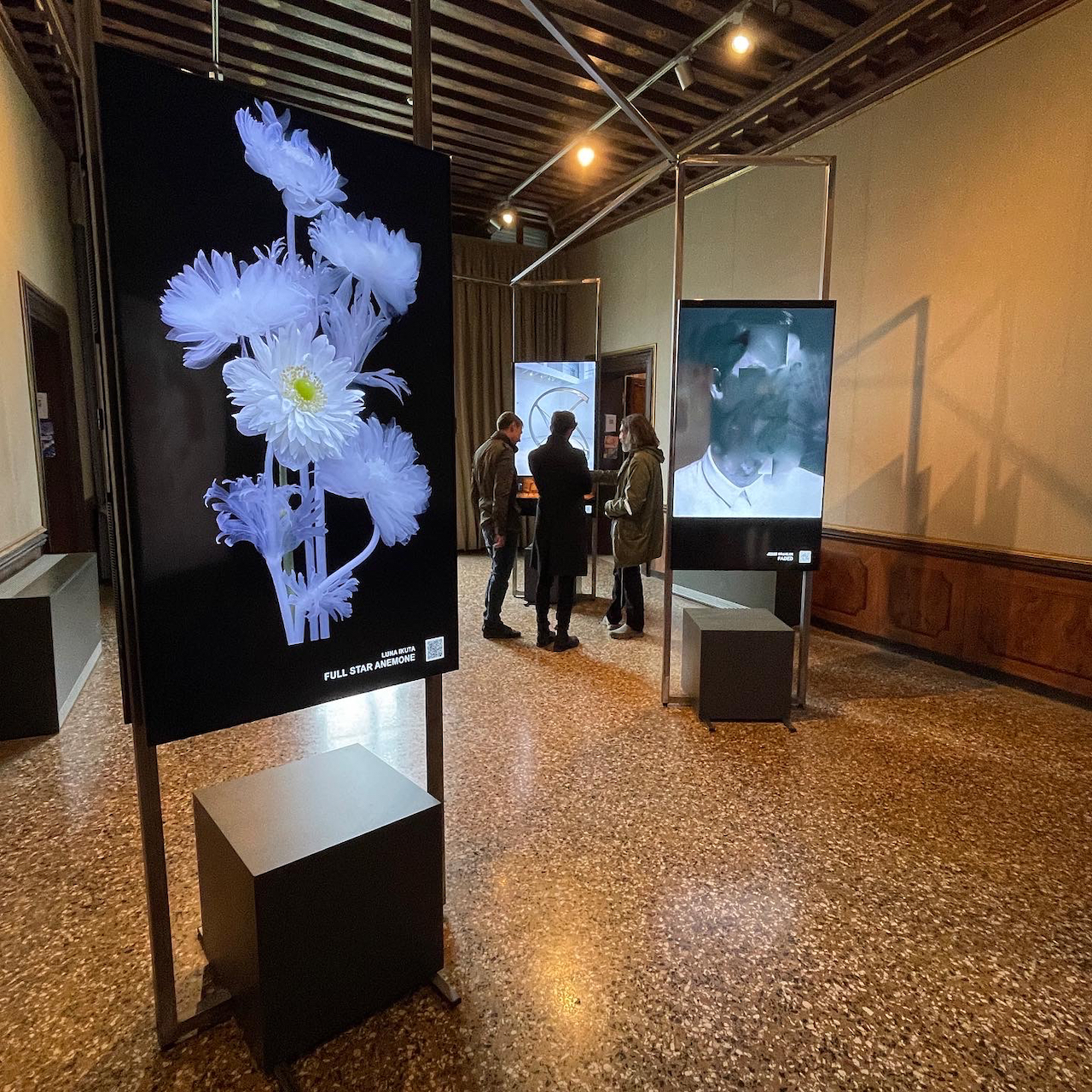

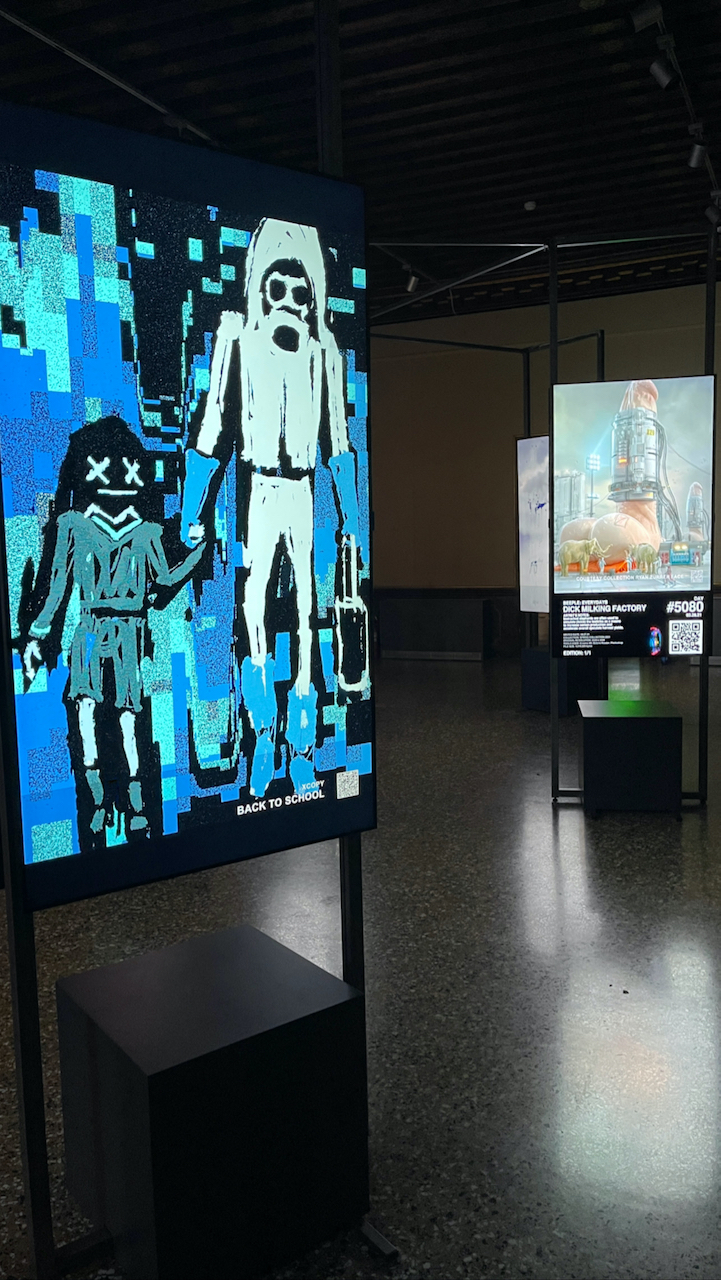


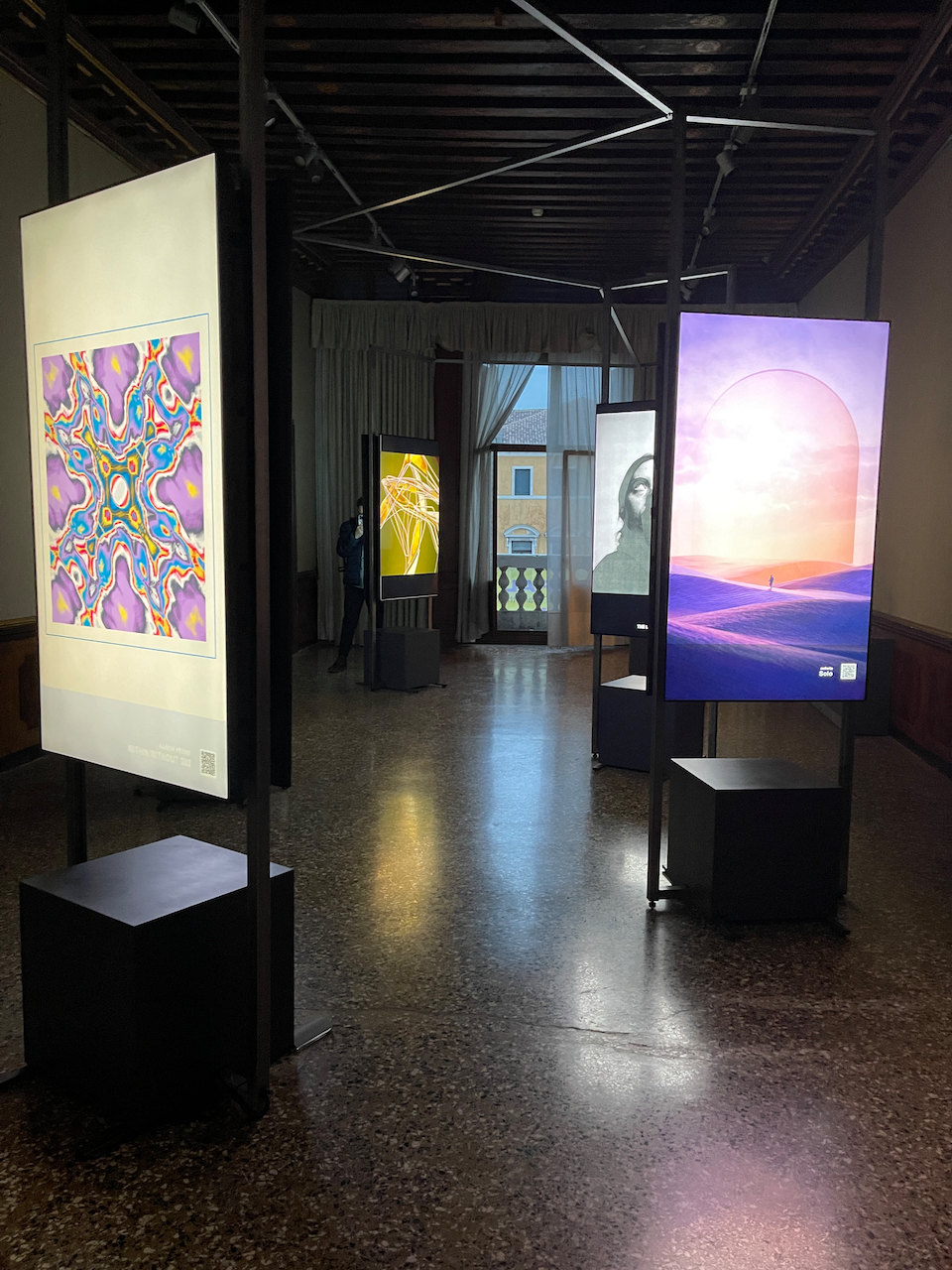


Art Night, 18 June 2022
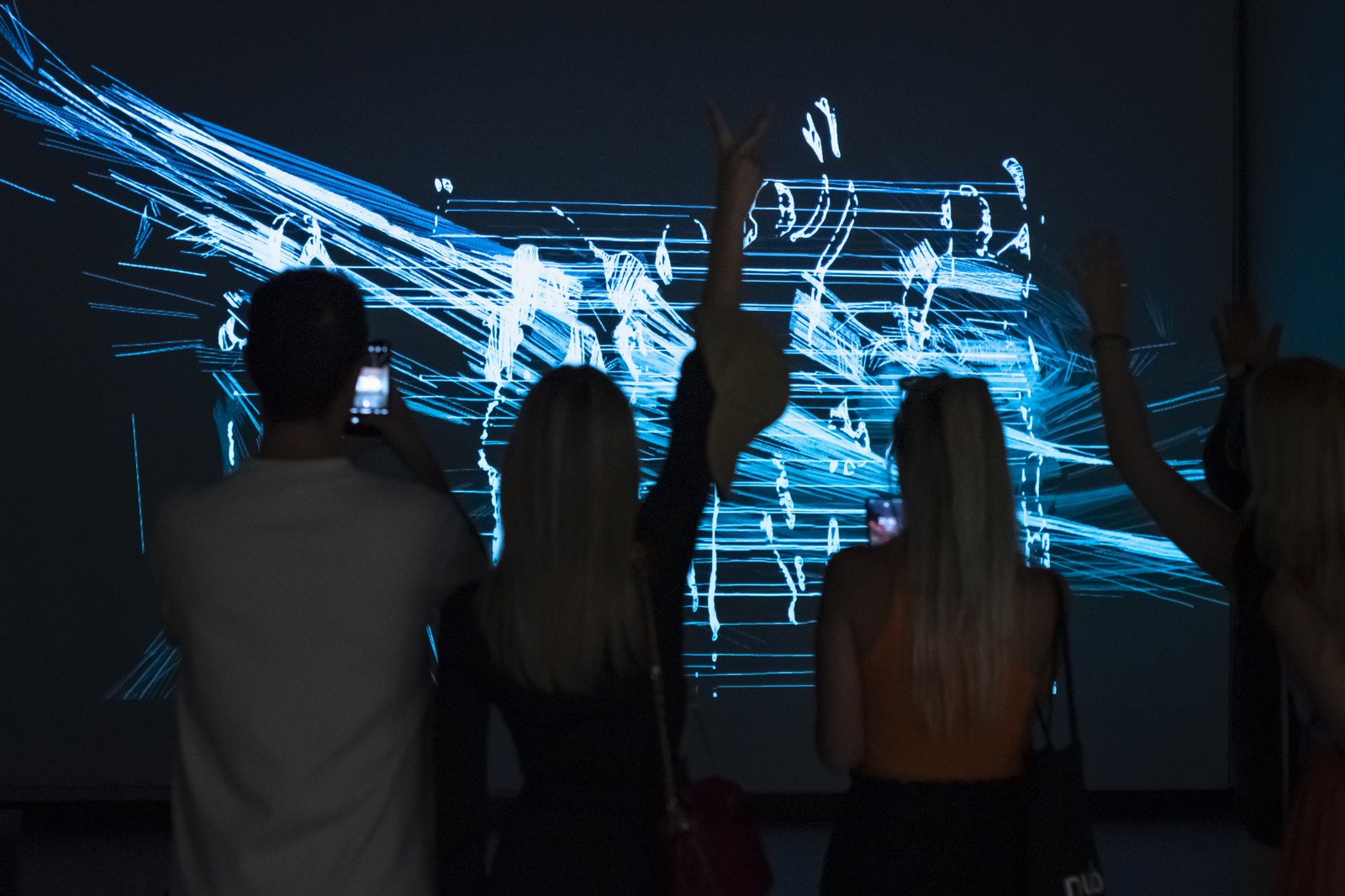
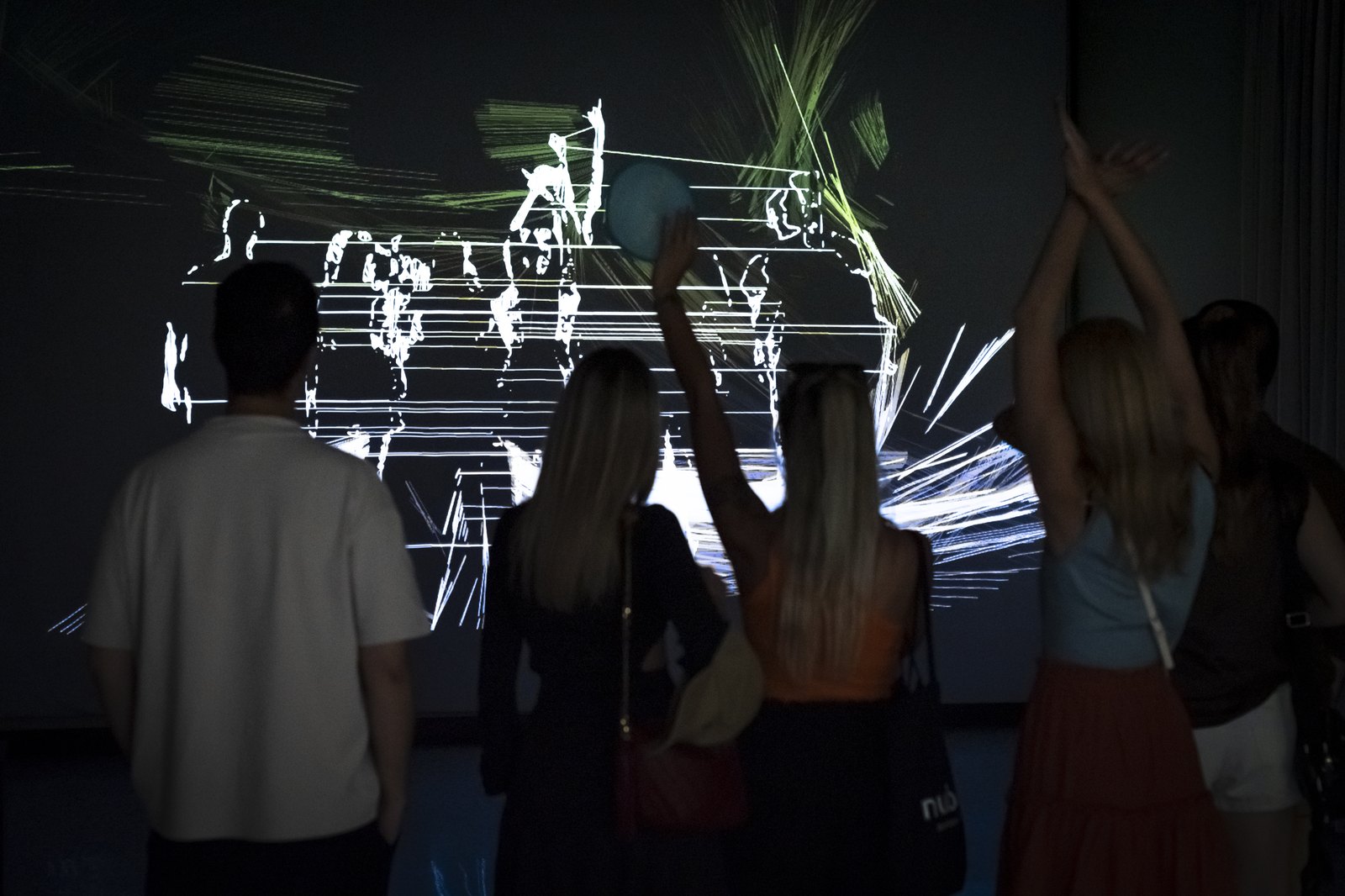
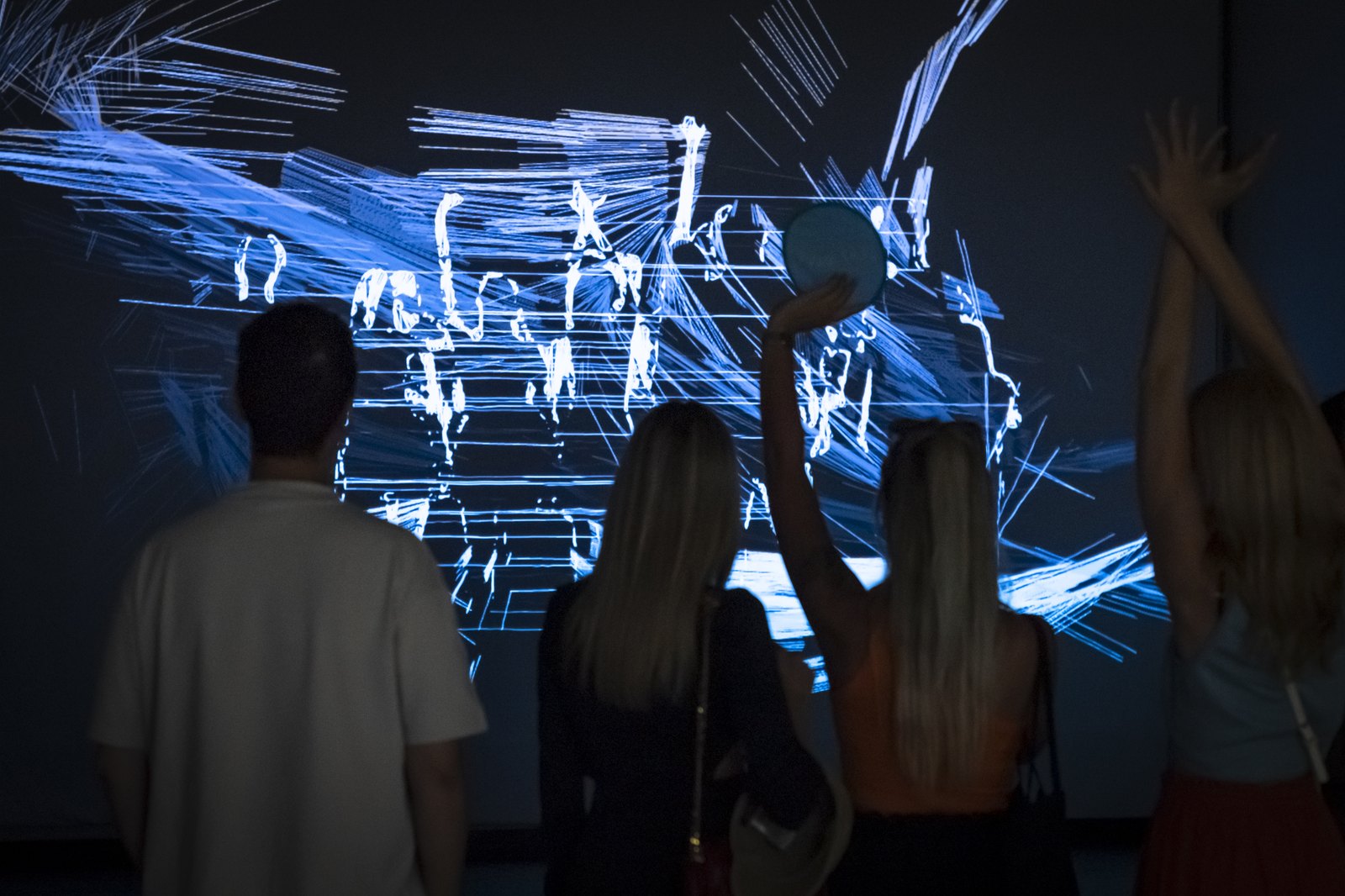
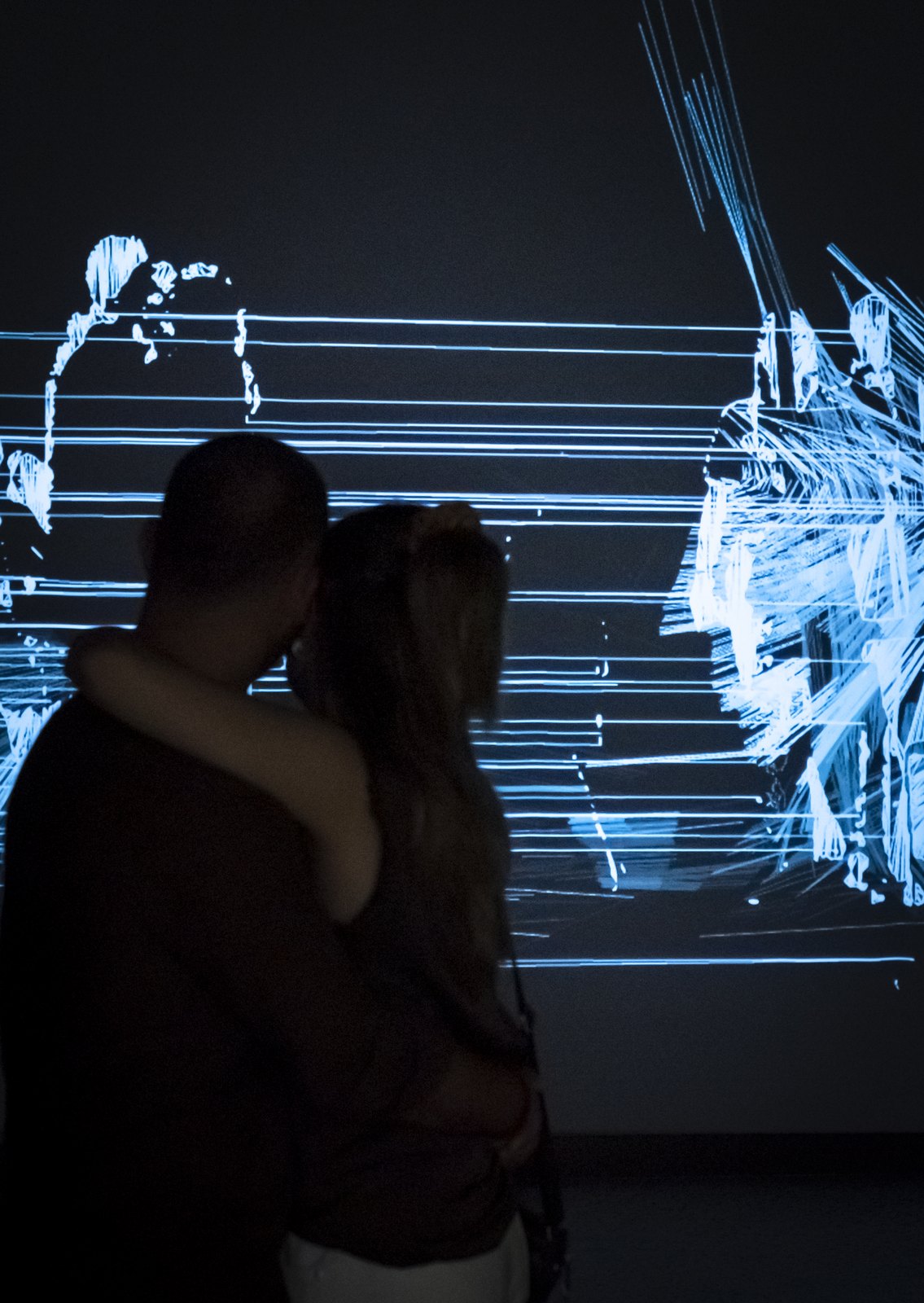
For Venice Art Night on 18 June 2022 the pavilion stayed open until midnight, and Florencia S.M. Brück set up Out of Body as an interactive installation in the main room of Palazzo Giustinian Lolin, where visitors could take part in the work. A motion sensor read the outline of each visitor and an algorithm redrew it in real time on the wall as abstract lines, slightly delayed and displaced: a second self that follows the person but no longer quite belongs to them. Free guided tours of the exhibition, in Italian and English, ran through the evening.
Florencia never tells visitors in advance why she made the work; she lets them experience it. Over the years their accounts have opened readings of their own. During Art Night in Venice, one visitor described it as a way of travelling through time. The figure on the wall, he said, comes from a movement made a few seconds earlier, which then meets the body in the present. You can make a gesture now, rest, and watch it unfold on the screen a moment later, already knowing what is coming because you made it in the past. Since then, each time she shows the installation, Florencia thinks not only of her own out-of-body experience but of time itself, and of how acting more consciously now can bend what those actions become later in our lives.
Work shown: Out of Body