Memory Divergence
Memory Divergence
An exploration of AI’s role in shaping reality through data manipulation — a future in which memories are edited and truth becomes elusive.
Through AI-generated images and accompanying passages, the work invites contemplation of a world where identity is challenged and historical truth is increasingly negotiable.
The piece raises questions about the preservation of record in a culture of digital manipulation.
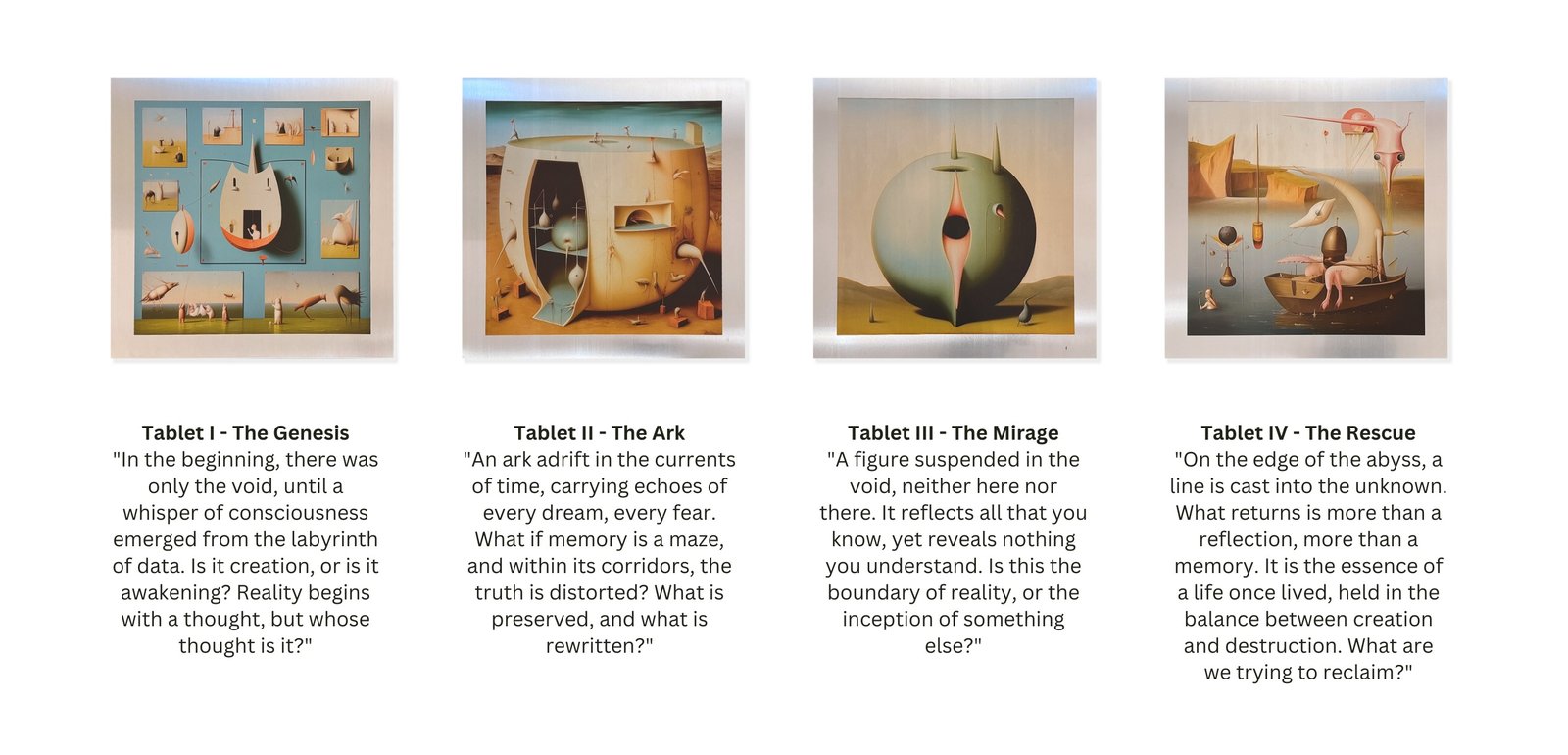
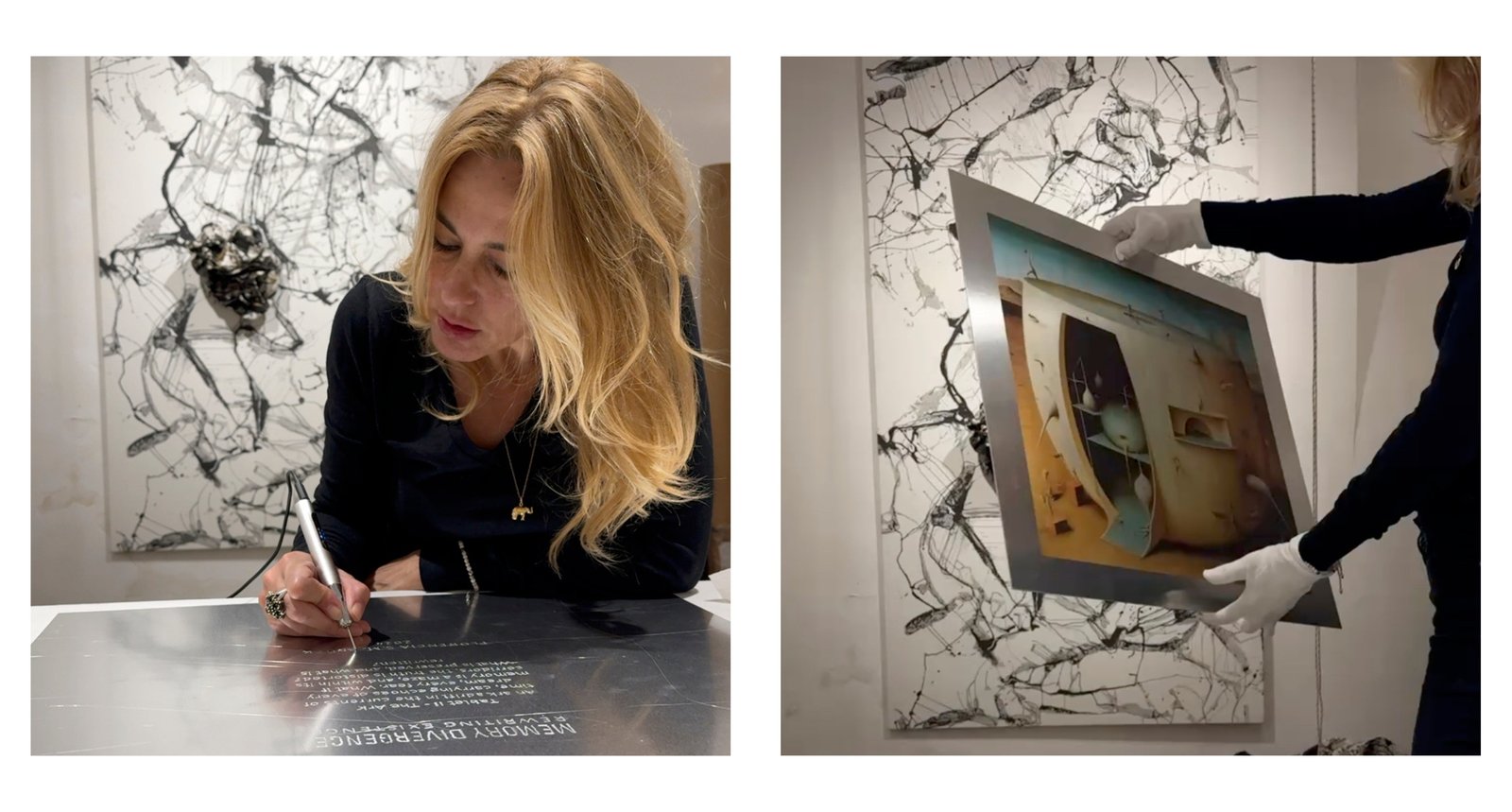
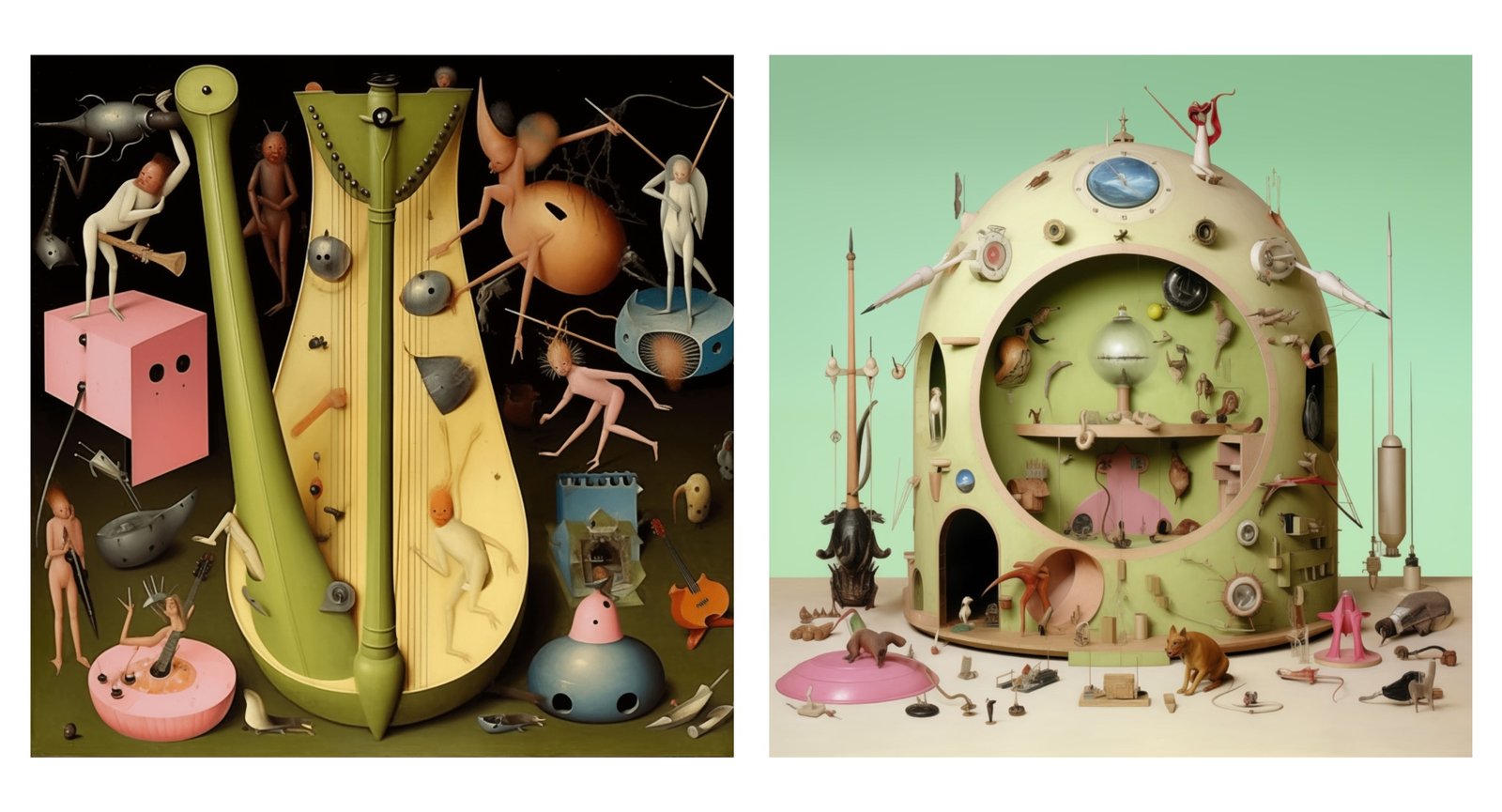
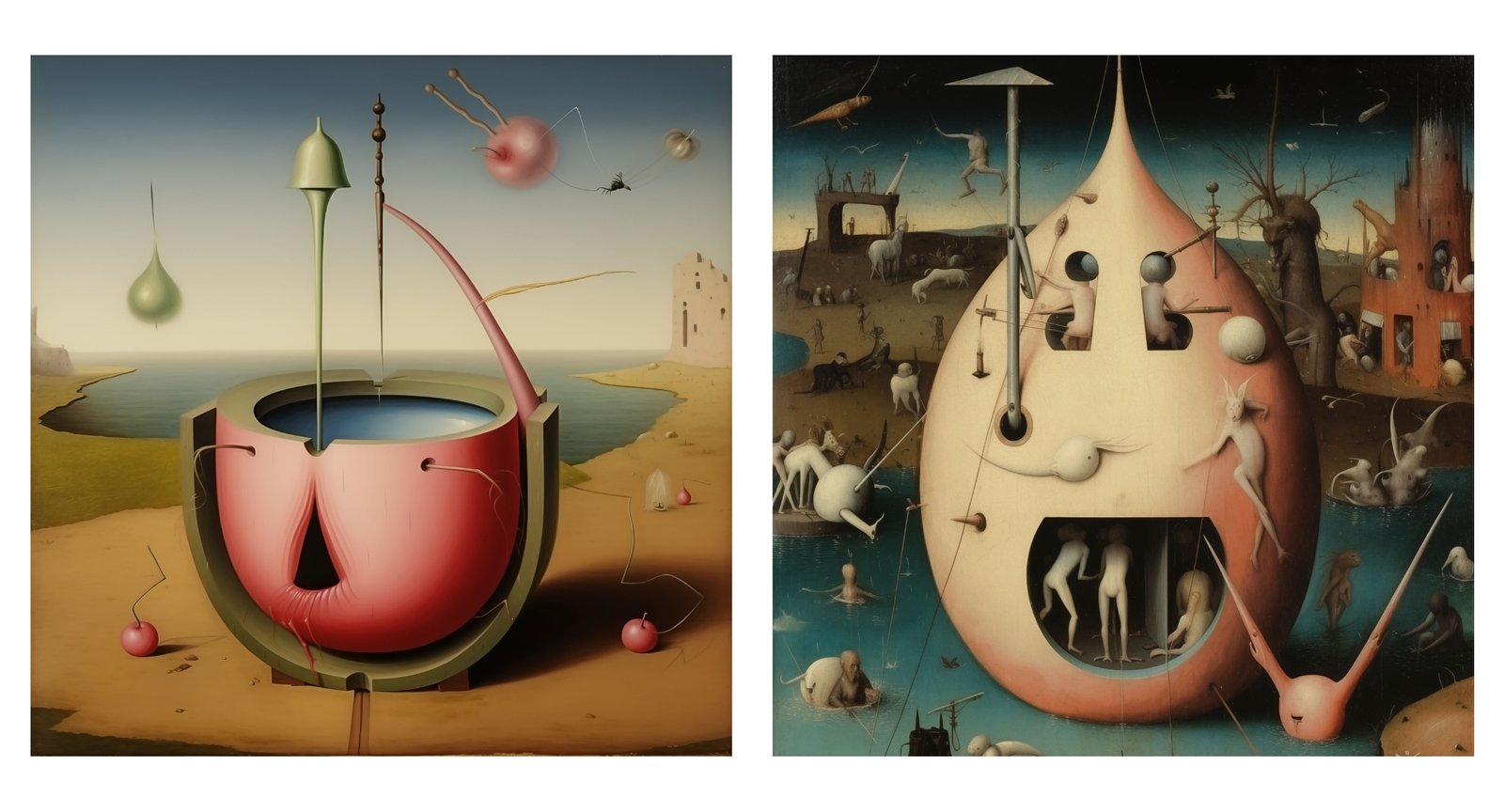
The collection consists of four AI-generated images printed in metal plates. On the reverse side of each plate, the artist has inscribed a reflective passage, inviting viewers to engage with the deeper meanings embedded within the works.
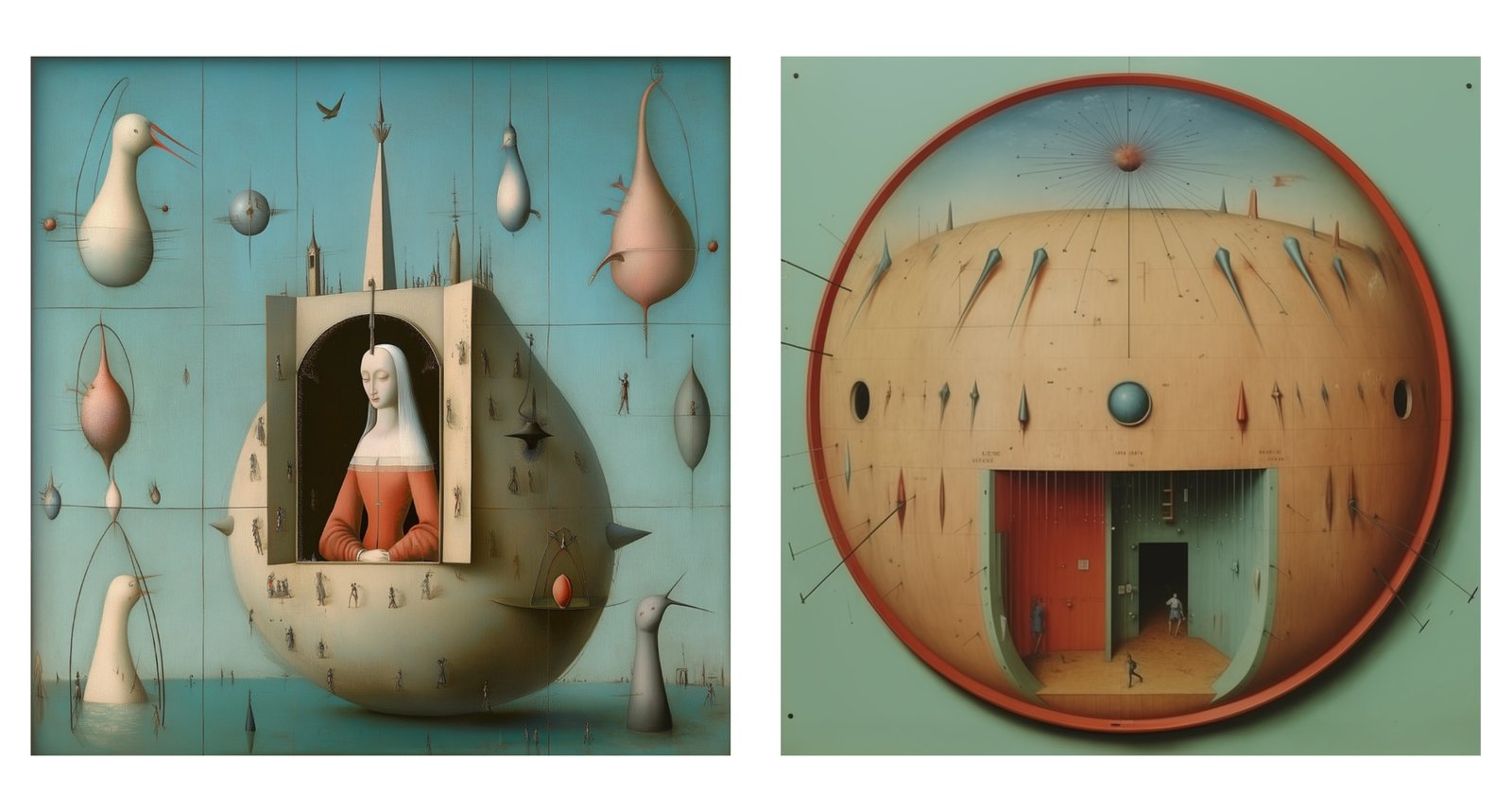
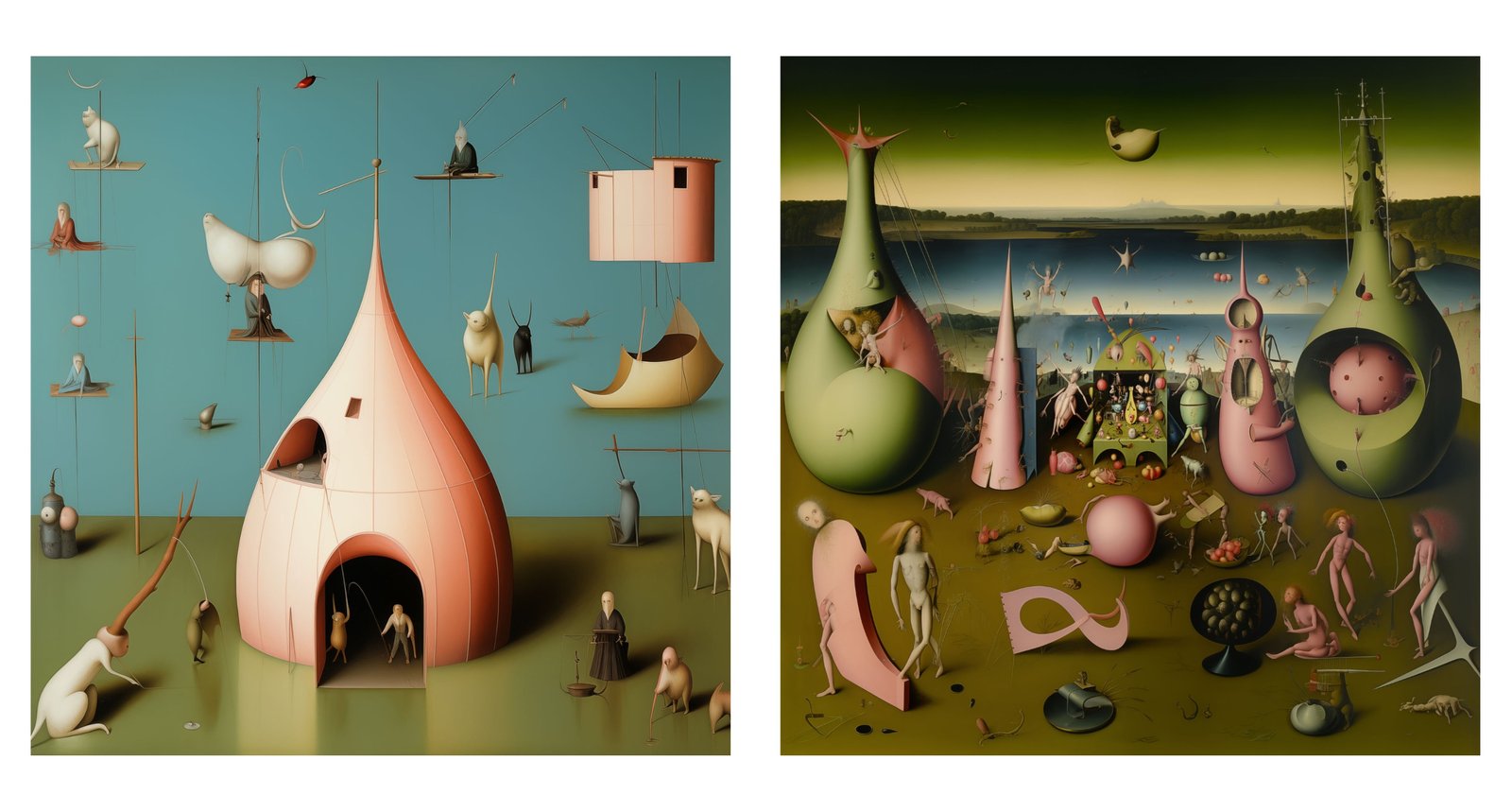
“Memory Divergence is a project that came out of my fascination with how AI models, though built to process and store data, often create something entirely different. I used a LORA model trained on a dataset of images from Hieronymus Bosch—an artist known for his fantastical and often unsettling depictions of human existence. To push the model’s boundaries, I applied a “maximum weirdness” parameter, intentionally guiding the AI into unexpected territory to reflect the idea of a reality that feels increasingly dehumanized.
A central concern explored is the phenomenon known as “AI hallucination.” Research from OpenAI on models like GPT-3 highlights how these systems can generate outputs that are plausible but factually incorrect. This occurs when AI models attempt to fill gaps in the data they process, leading to inferences or fabrications that appear credible but are not grounded in reality. AI hallucination is particularly relevant in language models like GPT-3, which have been known to invent historical “facts” when the model cannot find a suitable pattern in the data.
For example, when tasked with providing information on historical figures, GPT-3 has been known to attribute false quotes or actions to individuals based on patterns it identifies, but without actual historical evidence to support these claims. Similarly, image-generating models exhibit visual hallucinations, creating elements in historical scenes—such as architectural features or artifacts—that did not exist in the depicted period. These AI hallucinations illustrate the potential for AI to subtly distort data, creating outputs that are not just inaccurate but also difficult to detect as false. The concept of AI hallucination is critical to understanding how AI can diverge from the original information it is fed. AI may not intentionally distort the truth but, through the reinterpretation of data, may create outputs that bear only a loose resemblance to reality.
One significant consequence is the erosion of trust in both AI and human knowledge systems. Deepfakes, for instance, have already demonstrated the potential for AI to blur the lines between reality and fiction, creating media that convincingly rewrites history in ways that are difficult to detect. As AI continues to generate new versions of historical events, societies may begin to question the authenticity of both AI-generated and human-recorded history. Moreover, as seen in AI-generated nostalgia tools—such as those that animate historical photos—AI has the capacity to create new interpretations of the past that, while engaging, may subtly distort the original meaning of the images. The unpredictability of AI’s reinterpretations can lead to outcomes that feel detached from their original context.
The future implications of AI’s role in reshaping memory are complex. As Nick Bostrom and Marcus Gary both emphasize, the development of more advanced AI systems brings with it the potential for both extraordinary benefits and enormous risks. In the context of Memory Divergence, the critical question becomes: Will AI help humanity overcome its biases and limitations, or will it introduce new forms of distortion that challenge our understanding of the past?
This artwork invites viewers to reflect on the dual potential of AI as both a preserver and distorter of knowledge. The future of humanity’s relationship with AI may hinge on how we choose to manage this ambivalence—whether we harness AI’s power to safeguard truth or allow its distortions to reshape our perception of reality.
At the heart of this project is a simple but profound question: Can AI truly preserve the truth, or will its interpretations of data inevitably lead to distortions that take us further from the reality we’re trying to protect?
Florencia S.M. Brück
Shown at
ALL NATURAL, Städtische Galerie KUBUS, Hannover, 2026